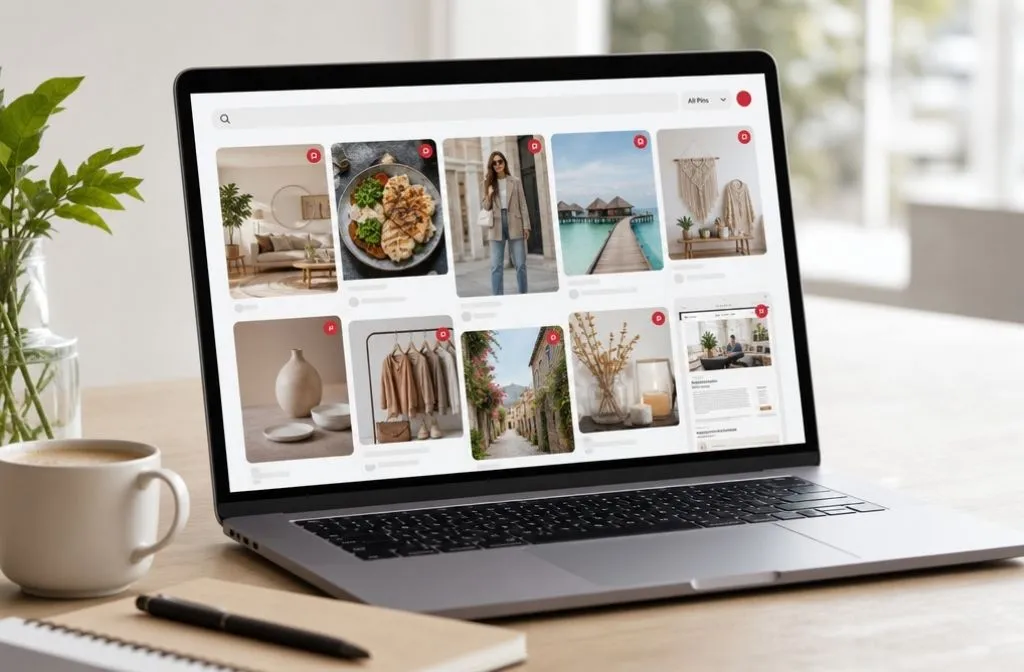
What Is Pinterest Used For? 10 Ways People Use It Every Day
Pinterest closed its most recent quarter with 640 million monthly active users, an 11% year-over-year increase and its 11th straight quarter of double-digit user growth. That’s not the profile of an app people open once and forget about.
So what is Pinterest used for? For most people, it starts small: saving a recipe, a paint color, an outfit. For bloggers, store owners, and marketers, it turns into something closer to a free, long-term traffic engine. Both are correct, and most people slide from one into the other without ever planning to.
Below are 10 of the most common ways people use Pinterest, split into everyday personal use and business use, plus what makes the platform different enough from other social apps to be worth your time either way.
What Is Pinterest, Exactly?
Pinterest is a visual discovery platform, not a traditional social network. Users save images, videos, and links, called “Pins,” to themed boards, then let Pinterest’s search and recommendations surface more of what they’re already interested in.
Pinterest itself describes the platform as a place where people “search, save and shop ideas” as they plan everything from weeknight dinners to major life milestones. That framing matters: people show up with a goal, not just to pass time.
If you’re brand new to the platform, What Is Pinterest? A Complete Beginner’s Guide covers the basics in more depth.
Why Pinterest Feels Different From Other Social Media
Before getting into the 10 uses, it helps to understand why Pinterest keeps pulling people back in ways other platforms don’t.
Your content doesn’t expire. On Instagram or TikTok, a post’s visibility mostly dies within a few days. On Pinterest, a well-made Pin can keep surfacing in search and recommendations for months or years after you publish it, as long as the topic stays relevant.
You don’t need a big following to be seen. Pinterest’s home feed and search results drive most of the discovery, not follower counts. A brand-new account with a handful of well-targeted Pins can outperform an account with thousands of followers and no keyword strategy.
People arrive ready to act, not just to scroll. According to Sprout Social’s analysis of Pinterest’s own data, 85% of weekly Pinterest users have purchased after seeing a Pin from a brand. That’s a different mindset than checking a feed for updates from friends.
It behaves more like a search engine than a social app. You don’t need to “socialize” on Pinterest to get value from it. Typing a search term and browsing results works closer to Google Images than to a typical social feed.
5 Ways Everyday People Use Pinterest
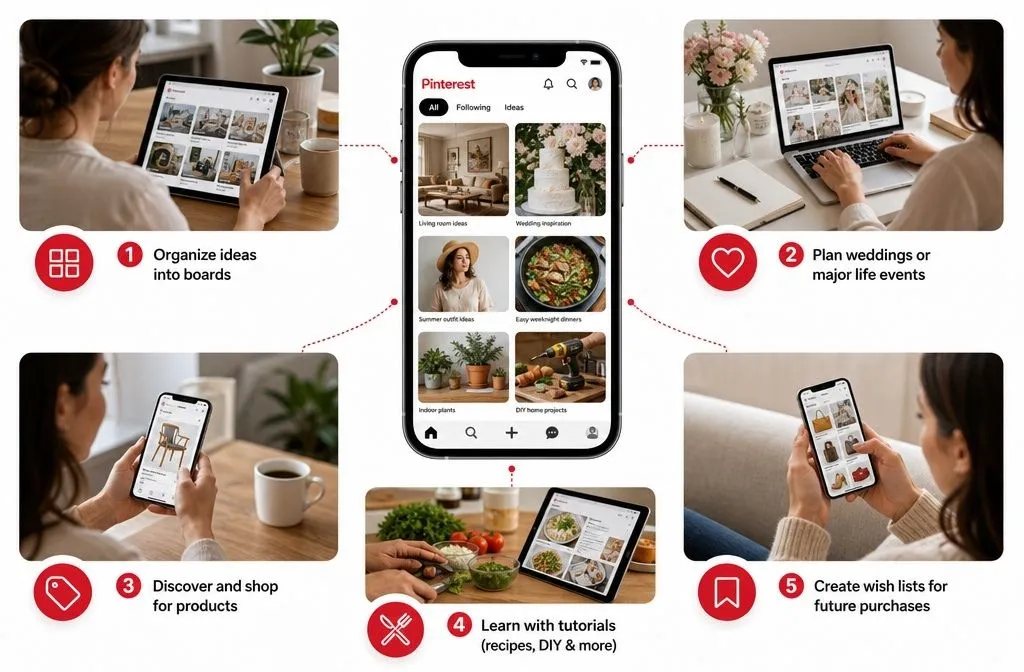
1. Organizing Ideas in One Place
Most people’s first Pinterest board starts as a dumping ground for things they don’t want to lose: a recipe from a friend’s Instagram story, a paint swatch, a workout routine. Boards work like folders, so ideas stay sorted by topic instead of scattered across screenshots.
2. Planning Big Life Events
Weddings, home renovations, nurseries, and moves are some of the most common reasons people open Pinterest. A dedicated board lets you collect color palettes, vendor ideas, and layouts in one visual reference you can share with a partner, planner, or contractor.
3. Discovering and Shopping for Products
Pinterest’s visual search makes it easy to find a product even without the right words for it. Many Pins link directly to a retailer, so browsing can turn into buying in a couple of taps, which is part of why purchase intent runs so high on the platform.
4. Learning New Skills Through Tutorials
Recipes, DIY projects, workouts, and craft tutorials are some of the most-saved content types on Pinterest. People use boards as a personal reference library, returning to a saved tutorial weeks or months after first finding it.
5. Building a Wish List for Later
Instead of impulse-buying or forgetting an idea entirely, many people create “want” or “someday” boards: gift ideas, travel destinations, furniture they’re saving for. It’s a low-pressure way to track things you’re not ready to commit to yet.
If you haven’t set up an account yet, How to Get Started on Pinterest (For Beginners) walks through creating boards and your first Pins step by step.
5 Ways Businesses and Creators Use Pinterest to Make Money
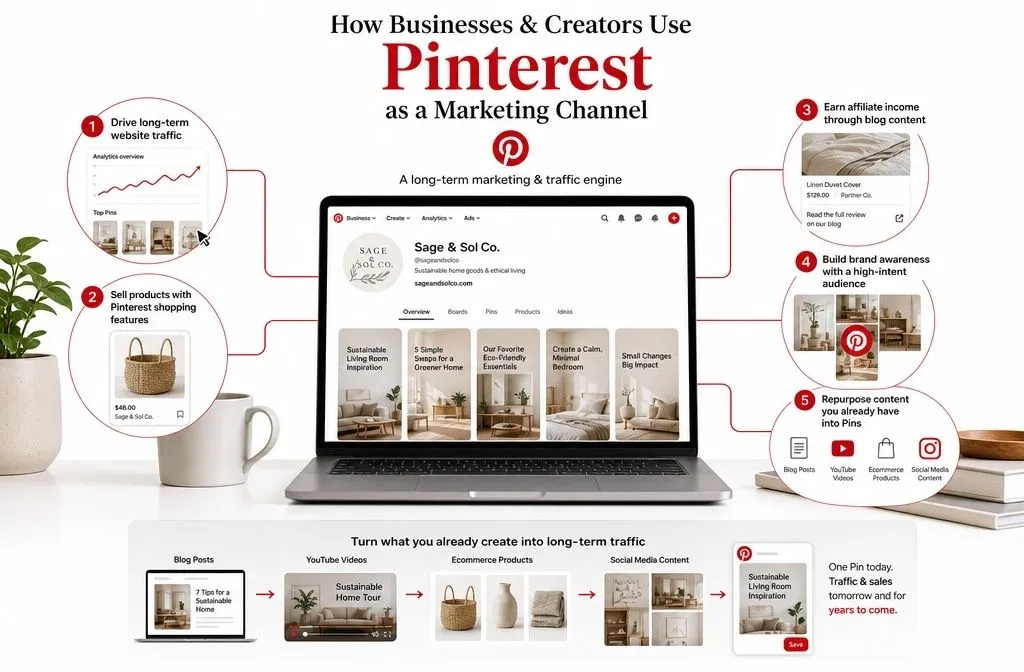
6. Driving Free, Long-Term Website Traffic
Because Pins keep resurfacing over time, a blog post or product page pinned today can still be bringing in visitors a year from now, without any extra work. This is the single biggest reason bloggers and ecommerce brands invest in Pinterest over paid ads alone. Getting there does require a Pinterest business account, which unlocks analytics and other tools a personal profile doesn’t have.
7. Growing an Online Store With Shopping Features
Product Pins pull in pricing and availability directly from a site, and shoppers can save items to boards the same way they’d save a wish list. For ecommerce brands, that turns Pinterest into both a discovery channel and a lightweight storefront.
8. Earning Affiliate Income Through Pins
Creators and bloggers commonly pin images that link to blog posts containing affiliate links, rather than linking directly to the affiliate offer. Pinterest’s own guidelines require this: pins should point to your own content, which then links out, not straight to an affiliate URL.
9. Building Brand Awareness With a High-Intent Audience
Because people come to Pinterest already planning a purchase or project, a business showing up in that search results in a warmer introduction than most social ads. A consistent presence across a few relevant boards puts a brand in front of people while they’re still deciding, not after they’ve already bought elsewhere.
10. Repurposing Existing Content Into New Pins
Blog posts, YouTube videos, Etsy listings, and even old Instagram graphics can all become new Pins without having to create anything from scratch. A single piece of content can be turned into several Pins, each featuring a different image or headline, multiplying your reach without increasing your workload.
If you’re already pinning consistently but traffic hasn’t followed, How to Get Traffic on Pinterest When Nothing’s Working breaks down the most common reasons impressions and clicks stall out.
Which Way Should You Use Pinterest?
Most accounts don’t stay purely personal or purely business for long. Someone pinning wedding inspiration today might be running a stationery shop on Pinterest in two years, using the same board-and-keyword habits they picked up planning their own event.
If you’re managing Pinterest for a business and the day-to-day of keyword research, pin design, and board strategy is eating time you don’t have, that’s the exact gap Khrizclusive’s Pinterest management services are built to close. [Book a free consultation] to talk through what a done-for-you setup could look like for your account.