If your pins aren’t showing up in search or home feeds, the usual reason is simple: you’re fighting the Pinterest algorithm instead of working with it. Pinterest doesn’t behave like a social feed that rewards whoever posts the most. It behaves like a search engine, matching pins to what people are actively looking for. Once you understand how the Pinterest algorithm works, most of what feels random about Pinterest starts to make sense.
What Is the Pinterest Algorithm?
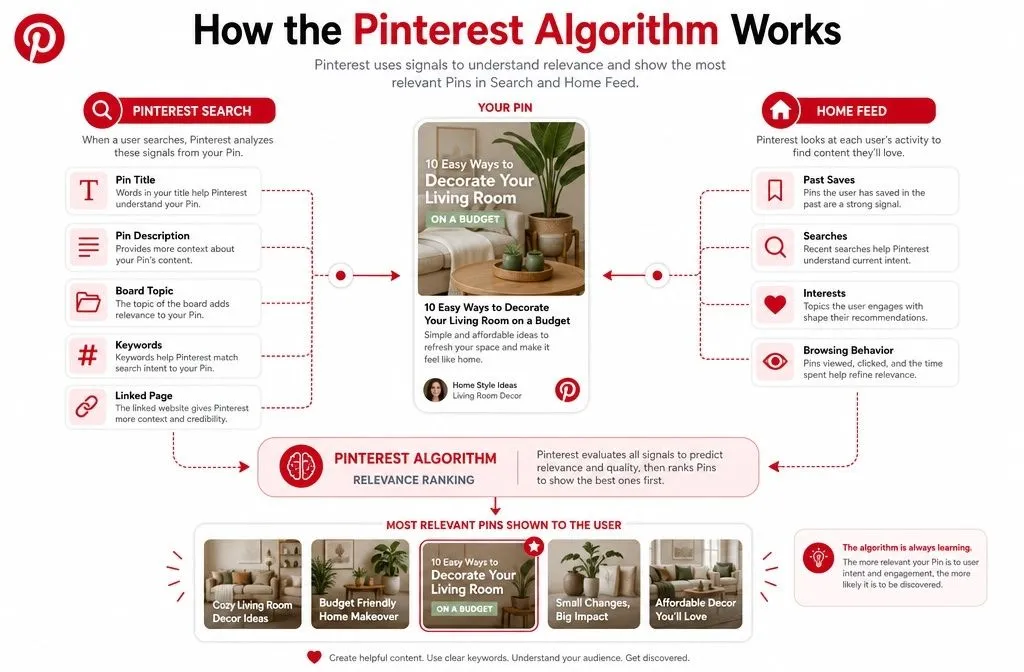
The Pinterest algorithm is the set of machine learning models Pinterest uses to decide which pins show up in a user’s home feed, search results, and Related Pins. Internally, Pinterest calls this system Pinnability. It scores pins against a user’s saves, searches, and browsing history, then ranks them by predicted relevance.
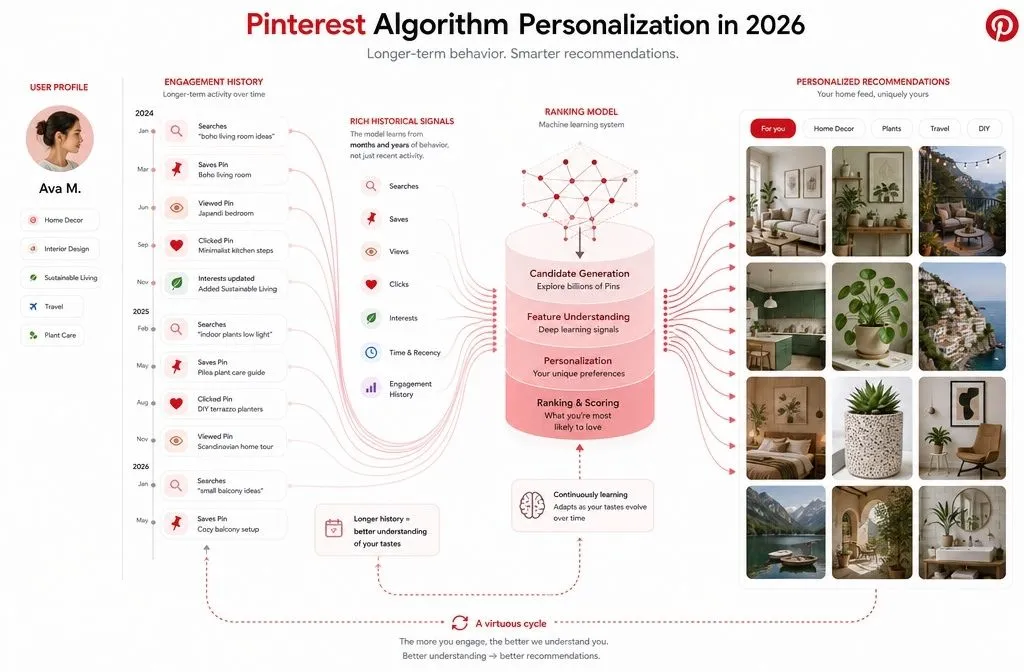
Pinnability isn’t one static formula. Pinterest’s engineering team rolled out a new foundation ranking model this year that trains on two years of user activity and feeds directly into home feed and Related Pins ranking. The goal behind all of it has stayed the same: show each person pins they’re likely to save or click through, not just pins that are popular in general.
How the Pinterest Algorithm Works
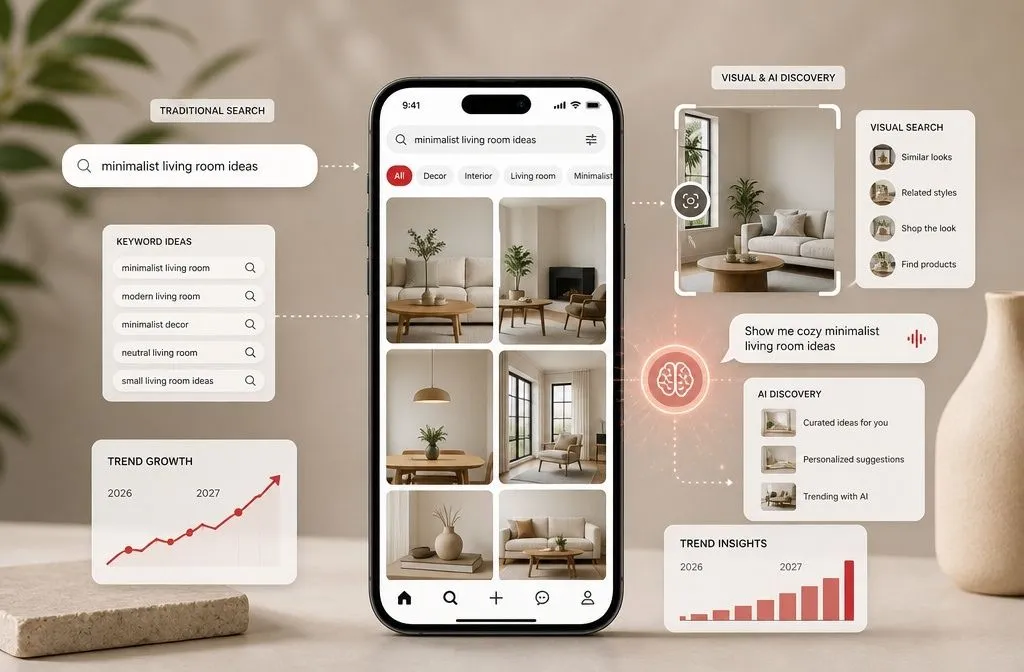
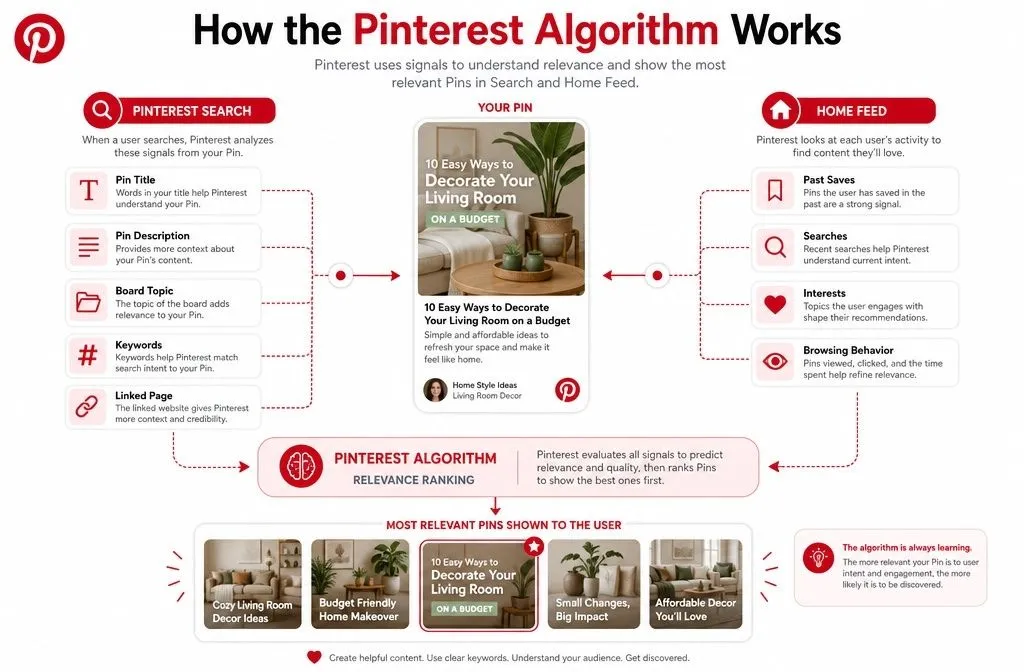
Search and home feed work slightly differently, but both rely on the same idea: match content to intent. When someone types a query, the algorithm checks your pin’s title, description, board name, and linked page to decide if it fits. When someone opens their home feed, it predicts what they’ll want based on past saves and searches, then ranks pins accordingly.
Keyword placement matters so much on Pinterest because of this text-matching process. Pinterest reads text, not just images, to figure out who should see your pin. With 631 million monthly active users as of Q1 2026, up 11% year over year, there’s more content competing for those spots than ever, which makes matching intent correctly even more important.
The 4 Pinterest Ranking Factors That Actually Matter
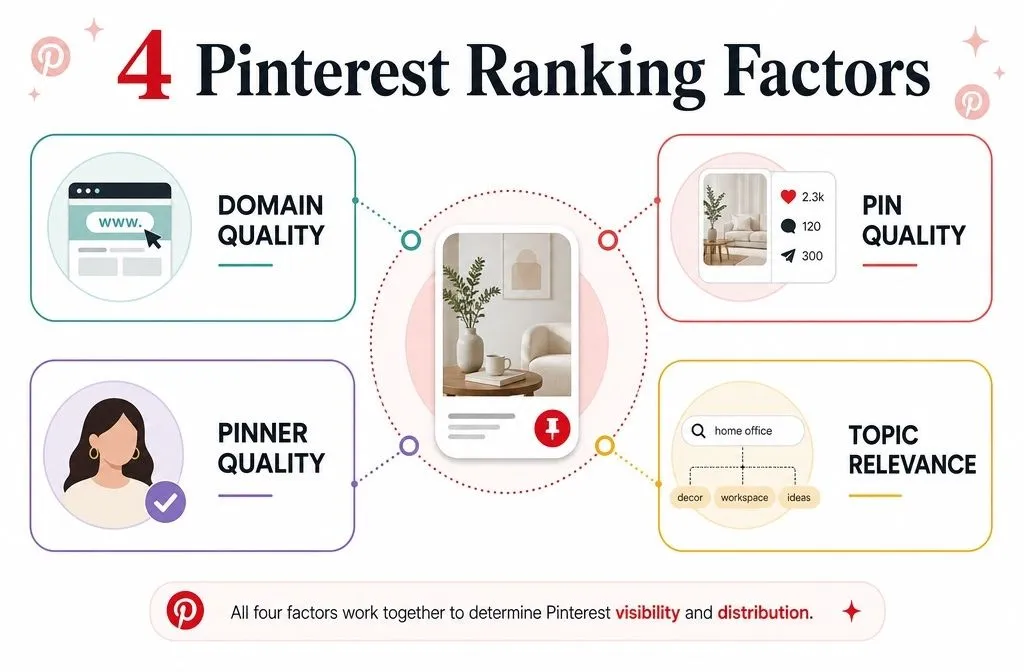
Independent research from marketers, SEO agencies, and Pinterest’s own documentation consistently points to the same four ranking factors. Get these right, and the rest of your Pinterest strategy has something to build on.
Domain Quality
Domain quality measures how much Pinterest trusts the website your pins link to. Pinterest looks at how often people click through, save, and engage with pins from your domain over time. Claiming your website inside Pinterest settings is the first step, since it connects your content and your site into one trackable entity.
Pin Quality
Pin quality is about the individual pin: how many saves, clicks, comments, and close-ups it earns relative to how many people saw it. A pin that keeps generating saves months after publishing signals sustained quality, which Pinterest rewards with more distribution. That’s one reason a single strong pin can keep driving traffic long after a viral post on other platforms would have died off.
Pinner Quality
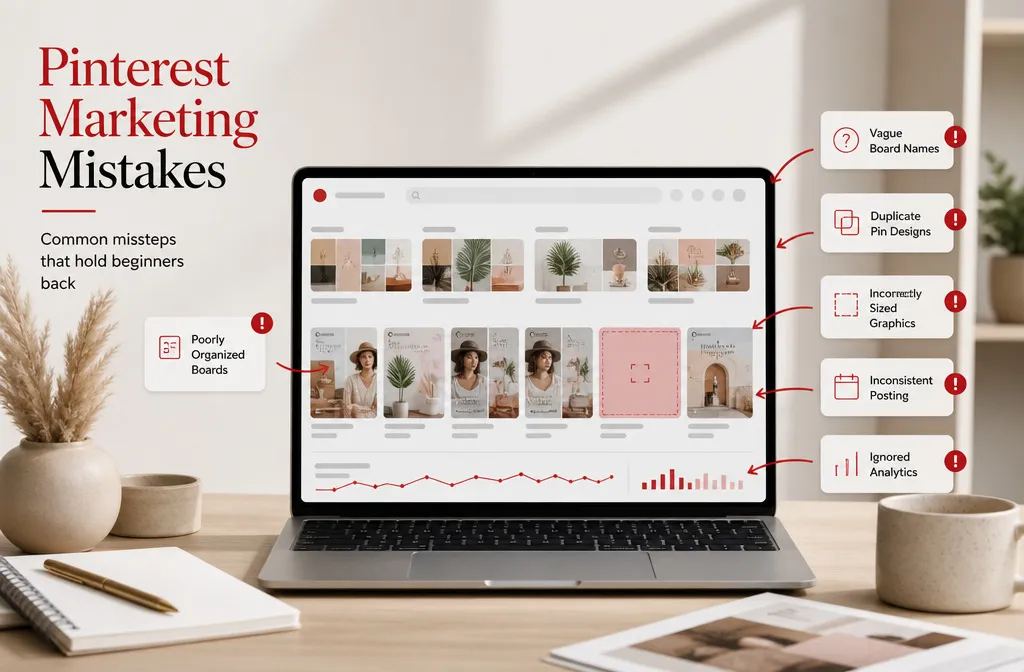
Pinner quality is Pinterest’s read on your account as a whole. It looks at how consistently you pin, whether your own content gets engagement, and whether you interact with the platform rather than only broadcasting. An account that goes quiet for weeks and then dumps 50 pins in one day sends a weaker signal than one that pins steadily.
Topic Relevance
Topic relevance is the match between your pin’s keywords and what a user is searching for or has shown interest in. This covers your pin title, description, board name, and alt text. Vague titles like “Great Ideas” give Pinterest nothing to match against, while specific phrases like “budget bathroom ideas” tell the algorithm exactly which searches to surface the pin for.
What Changed in the Pinterest Algorithm for 2026
The four ranking factors above haven’t changed. What’s shifted is how much weight Pinterest puts on longer-term personalization. Newer ranking models are built to model a much longer history of what an individual user has engaged with, not just their last few actions, which means accounts with a consistent, focused pinning history get matched more precisely to the right audience.
Video and Idea Pins are also getting more visibility than they did a couple of years ago, though static TOBI (text-on-background-image) and pure image pins still perform well in most niches. The safest move in 2026 is the same as it’s always been: test a few pin formats in your niche and let your own analytics tell you what to double down on, rather than assuming any one format is required.
Common Pinterest Algorithm Myths
A few beliefs about the Pinterest algorithm keep circulating even though they don’t hold up.
Follower count decides visibility. It doesn’t, at least not much. Pinterest traffic comes mostly from search and home feed recommendations, not from people scrolling a following feed. An account with 500 followers and strong pin quality will regularly outperform an account with 50,000 followers and weak engagement.
More pins per day always wins. Volume helps you test more angles and keywords, but pinner quality and pin quality matter more than raw output. Forty mediocre pins won’t outperform ten pins people actually save.
Group boards are still a shortcut. They carry far less weight than they did several years ago. Building your own focused boards and seeding them with relevant third-party pins does more for topic relevance now.
How to Actually Rank Higher on Pinterest in 2026
Once the four ranking factors are clear, optimizing for them (what most people call Pinterest SEO) is mostly a checklist:
- Claim your website through Pinterest’s domain verification and switch to a Business account so you can see Pinterest Analytics.
- Enable Rich Pins so Pinterest pulls your article title, description, and author directly from your site instead of relying on manual entry.
- Do real keyword research before writing titles and descriptions. Pinterest’s search bar autocomplete and Pinterest Trends both show real terms people are searching right now.
- Pin consistently, not sporadically. New accounts typically ramp up gradually, for example, starting around 5 pins a day and building toward 20 to 30 a day over a couple of months, rather than jumping straight to maximum volume.
- Track saves and clicks by pin, not just impressions. If impressions are healthy but clicks are low, the issue is usually the pin design or title, not your keyword targeting.
None of this is complicated, but it takes consistent attention, and it’s easy to get pulled in five directions at once when you’re also running the rest of your business. If you’d rather have someone handle keyword research, board strategy, and pin scheduling, reach out and I’ll take a look at your Pinterest account.